
Granule-safe chemistry
Soft rinses and controlled dwell times avoid the blast patterns power washers leave behind.
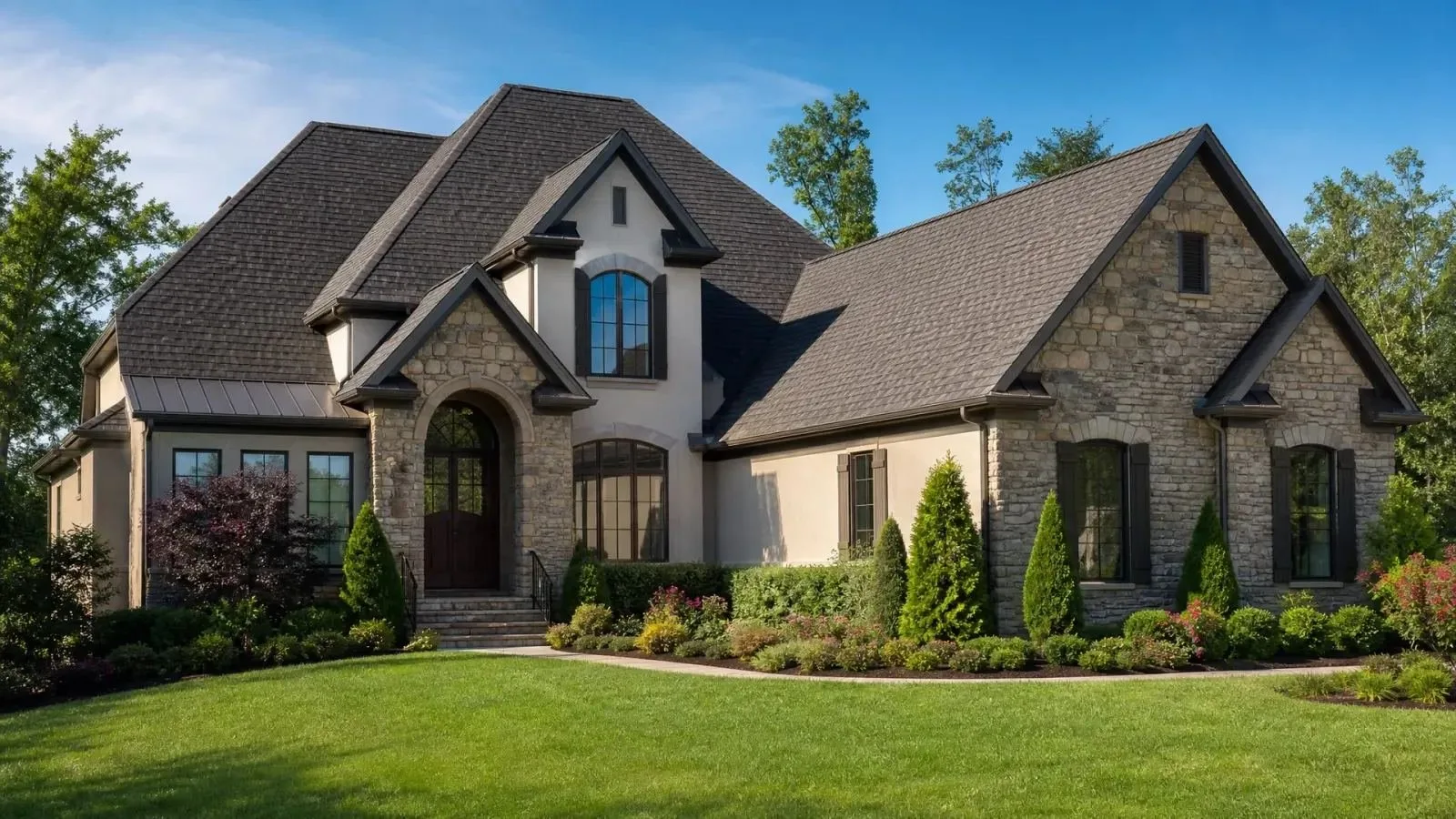
Gloeocapsa streaks on north faces are algae feeding on humidity off the water—not dirt you can brush away without a plan.
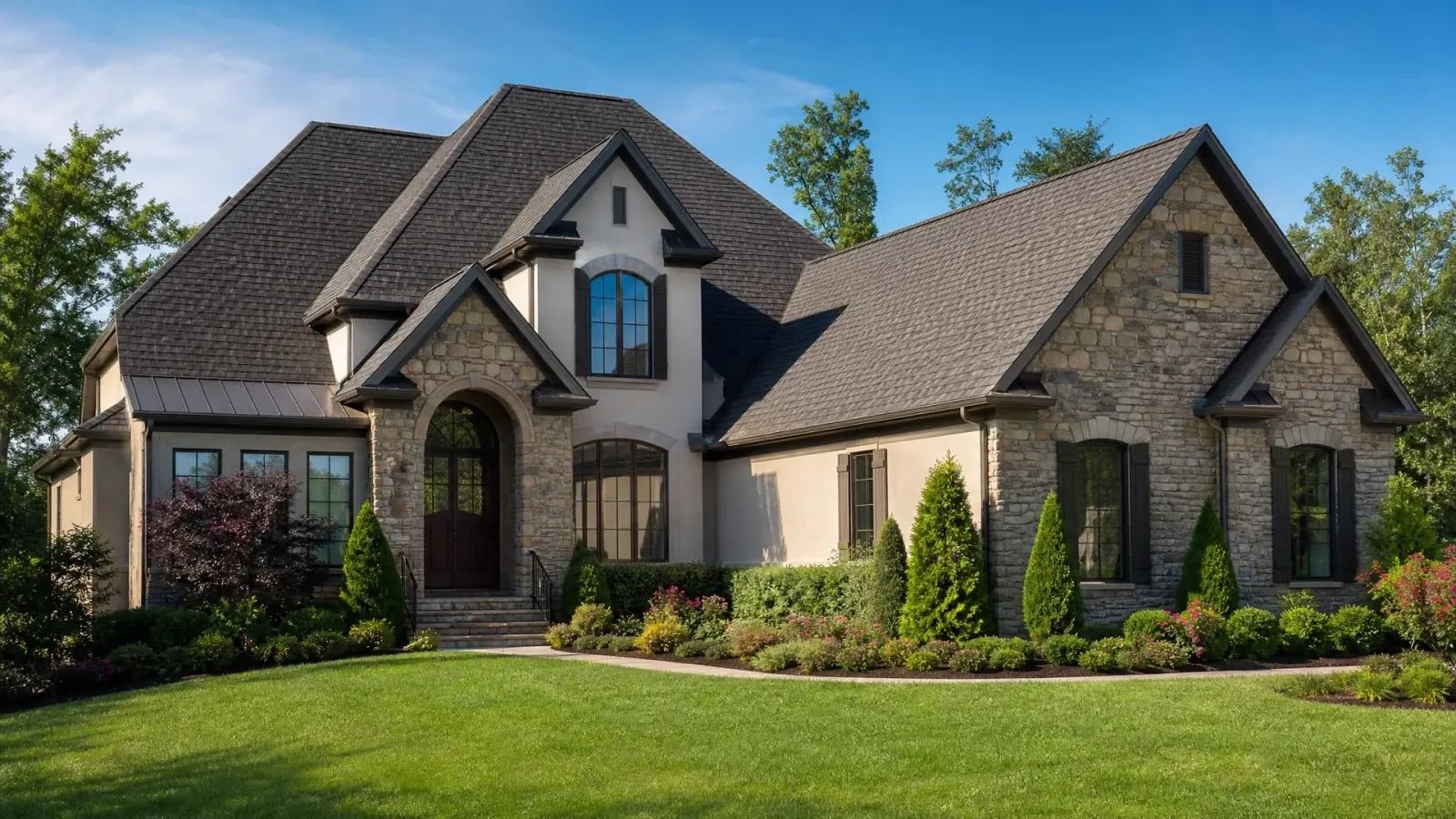
Lake-air moisture and tree shade combine into slow-drying slopes where cyanobacteria paint dark ribbons down architectural shingles.
Cosmetic at first, those colonies hold water against the mat and shorten granule life. Moss pads along drip edges lift tabs and invite capillary wicking.
Seasonal leaf dumps from shoreline oaks pack valleys and behind chimneys, composting into mat that blocks runoff. Extraction belongs in professional cleaning, not blower-only shortcuts.
Low-pressure chemistry preserves granules; aggressive power washing strips the sun shield you still need for Carolina summers.
Subdivision bundles from the same builder mean entire streets darken in sync—compare slopes with neighbors before assuming your roof failed alone.
Canopy trimming is the cheapest maintenance: more UV and airflow on the field, fewer organics landing in drainage paths. We mark limbs worth an arborist quote.
Ridge metals shedding ions can slow regrowth on some Cornelius roofs; they are supplements, not replacements, for periodic cleaning.
Bird droppings and marina soot from nearby exhaust can stain lighter shingles; we choose chemistry suited to organic film without attacking the granule coat.
Composite and tile roofs on custom lake builds need different approaches than asphalt; we state clearly when a wash is outside our scope and point you toward the right specialist.
Humidity off the lake keeps north slopes damp longer than inland Mecklenburg lots of the same age, so algae can return faster after cleaning unless shade and debris are managed.
Cleaning is not a fix for missing granules or soft decking—we pause and shift to repair or replacement talk when structure is the real issue.
Landscaping and hardscape get covered; loose shingles and spongy decking halt the job until repair scope exists—wet chemistry on open seams is asking for attic stains.
Dwell time, soft rinse, and valley policing finish the visit; some streaks lighten over days as organisms die off.
Cleaning doubles as surveillance—boot cracks, fastener back-out, and tired wall flashings get photo mentions.
Kaliber Roofing leaves beds, pavers, and gutter mouths without chemical splash or shingle grit piles.
Listing prep benefits from a clean ridge visible from the channel; inspectors then debate performance instead of biology.
HOA architectural reviews may ask how often cleaning is planned; we note methods and frequency suggestions when boards want maintenance proof.
Shade sails and pergolas cast patterns that mimic leak stains inside; we help distinguish organic roof growth from interior issues tied to condensation on cold duct lines.
Post-clean runoff is directed away from lake-facing beds so rinse water does not reach shrubs or pier footings downhill from the downspout.
Roofing Cornelius schedules the wash; Kaliber Roofing crews perform the work and note any repair issues spotted during the visit.
Homes preparing for sale often want a clean ridge line visible from the water; we flag structural issues separately so listing photos do not hide real problems.
Soft rinses and controlled dwell times avoid the blast patterns power washers leave behind.
Beds, pavers, and dock rails below the eave line get covered before solution hits the field.
Loose tabs or spongy sheathing pause the wash and flip to a repair discussion with photos.
Proper low-pressure methods protect granules. High-pressure rigs are not part of our process.
Humid north faces can re-stain. Trimming shade and keeping valleys clear slows the cycle.
Washing removes biology and debris. Oil treatments are a separate conversation for dried mats.
We state scope clearly on the visit request. Many lake custom homes use materials that need a specialist; asphalt wash jobs are our usual work here.